Engagement photographs should not make a couple look newly introduced. The strongest sessions usually begin when the camera stops asking for performance and starts recording contact, hesitation, humor, pressure, recovery, and ease.
The Performative Trap of Modern Engagement Sessions
Many couples look like strangers in their own engagement photos because the pose has become more important than the relationship inside it.
The pattern is familiar: the hand is placed at an approved angle, the chin is lowered by close to half an inch, the shoulder is rotated toward the lens, and both people are asked to hold an expression that started honestly but has now become maintenance. The resulting photograph may be clean, balanced, and easy to crop for an announcement card. It may also feel emotionally thin.
Social platforms have trained couples to recognize a narrow visual grammar of romance. A wind-swept forehead touch. A symmetrical embrace at sunset. A laughing image with no visible cause. These images are not inherently false, but repetition turns them into a script. Once couples arrive believing they must reproduce the script, the photographer is no longer documenting affection; the photographer is supervising an imitation of affection.
Repeated gallery reveals made the distinction difficult to ignore. Couples often paused longer over the candid outtakes than over the meticulously staged hero frames. They pointed to the almost-kiss that collapsed into laughter, the uneven walk down a gravel path, the private glance after a missed instruction. Those frames carried more emotional resonance because they contained evidence of the couple’s actual way of being together.
Why the outtake often survives the hero frame
A polished portrait can show what two people looked like. An authentic engagement photograph can show how they responded to each other. That difference becomes especially visible in places with textured environments, such as Deep Creek Lake, MD, where shoreline wind, uneven terrain, and changing light give couples something real to negotiate together.
The thesis is practical rather than sentimental: authentic interaction usually produces stronger emotional recall than directed perfection, because the body is reacting rather than performing.
The Psychological Toll of 'Perfect' Posing
A rigid pose asks the subjects to divide their attention. They must remember where the hands belong, whether the chin is too high, how much weight belongs on the back foot, and whether their expression still reads as affectionate. That cognitive load is visible.
Micro-managing hand placement and chin angles typically introduces visible tension in the masseter muscles after somewhere around 3 to 5 seconds of holding a static pose. The jaw sets first. Then the eyes lose softness. The smile remains, but it begins to separate from the rest of the face.
In practice, experienced photographers stop adjusting posture when the instructions begin to override emotional presence. A slight turn of the body may improve the composition, but a fifth correction can drain the subject’s attention from the person they love and redirect it toward compliance. The photograph becomes technically quieter and emotionally louder in the wrong way.
Posture is not connection
Traditional posing often treats the couple as a two-person sculpture. Shoulders align. Fingers stack. Faces tilt into the same plane. This can be useful for a formal portrait, especially when the goal is clarity and elegance. It becomes a problem when every frame uses that grammar.
Genuine connection behaves differently. It is asymmetrical. One person leans first. One hand arrives late. One laugh interrupts the other person’s sentence. The composition may require more patience, but the body language carries its own logic.
That logic is what the camera should protect.
For couples concerned about whether documentation changes experience itself, the American Psychological Association has discussed the psychological impact of documenting genuine experiences. The useful takeaway for engagement photography is not that the camera disappears. It is that attention matters. A session built around presence gives couples a better chance to remain inside the experience rather than standing outside it and evaluating their own performance.
The Counter-Argument: The Fear of Awkwardness
The strongest argument for heavy posing comes from a very human place: many couples do not know what to do with their hands.
That anxiety deserves respect. Being photographed before a wedding can feel exposed, especially for couples who are comfortable together in private but uneasy under observation. Without a script, they may worry that they will look stiff, mismatched, or unphotogenic. The instinct to request precise direction is not vanity. It is self-protection.
Field Note: When awkwardness appears, the first useful move is often not correction. It is acknowledgment. A couple who hears that somewhere around the first ten minutes may feel strange usually relaxes faster than a couple who receives a rapid sequence of body-position commands.
Posing can mask discomfort, but it rarely resolves it. It gives the hands a destination while leaving the nervous system on alert. The couple may look composed, yet the photograph still carries a subtle artificiality because both people are waiting to be released.
A better approach distinguishes between structure and control. Couples do not need to be abandoned in front of the lens. They need a framework that gives them something to do without asking them to manufacture feeling on command.
When light direction is still useful
There are cases where open-ended movement prompts are too much at first. Some couples freeze entirely when asked to walk, talk, or improvise. In those moments, a temporary regression to light directed posing can rebuild confidence. The important distinction is duration: directed posing becomes a bridge, not the destination.
Awkwardness is not the enemy of authentic engagement photography. Unexamined control is.
Methodological Shift: From Posing to Prompting
The alternative to stiff posing is not chaos. It is a more disciplined method of direction.
Kinetic prompting gives the couple an action instead of a shape. They might walk toward a distant dock at Deep Creek Lake, Maryland, trade a private joke, compare who gives worse directions, or move from bright shoreline into the edge of tree cover. The photographer studies the transitions: the hand that reaches back, the face that turns before speaking, the unplanned contact after a step on uneven ground.
Movement-based prompts require patience. Implementing them usually calls for an initial warm-up period of nearly 15 to 20 minutes before subjects fully drop their performative posture. During that time, the early frames are not wasted. They reveal how the couple reacts to the camera, how they recover from awkwardness, and which forms of direction create ease rather than tension.
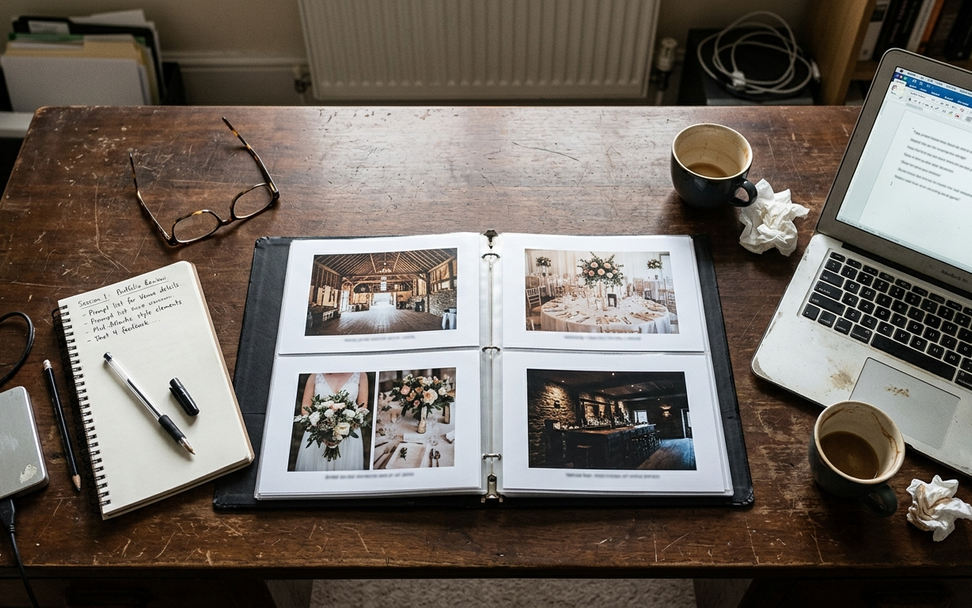
A practical prompting sequence
- Begin with low-stakes walking. The goal is not a perfect stride. The goal is to let the couple feel motion before they worry about expression.
- Add a private verbal task. A whispered memory or small prompt gives the face a real reason to change.
- Use the environment as direction. Stairs, docks, tall grass, and shoreline paths create natural adjustments in posture.
- Reduce intervention once rhythm appears. The photographer observes and refines composition rather than interrupting every gesture.
This method changes the photographer’s role. The photographer remains responsible for light, lens choice, background discipline, and timing, but the emotional material comes from the couple’s interaction. Direction becomes facilitation rather than choreography.
The result is not less technical. It is technical control applied in service of a less controlled human exchange.
Scope and Limitations of Documentary Engagement Photography
Authentic engagement work requires more time than a quick portrait stop. It also requires a higher degree of mutual trust.
Documentary-style engagement sessions often need a booking window in the neighborhood of 90 to 120 minutes to allow for environmental interaction and natural pacing. That window gives the couple room to decompress, move through several emotional registers, and stop treating each frame as a test. Scheduling decisions should reflect that need. Stacking back-to-back sessions may be efficient on a calendar, but it leaves little space for the quieter moments that make this style work.
Important: This unscripted approach falls apart during rapid mini-sessions, often close to 15 minutes, where the compressed timeframe forces the photographer to rely on rapid-fire, static posing to guarantee a minimum deliverable gallery.
Environmental factors also matter. Wind, shifting light, crowded public spaces, wet ground, and seasonal shoreline conditions can introduce imperfections that a more controlled posing structure would avoid. High-wind environments along the Mid-Atlantic coast, for example, may force a shift from wide, unscripted environmental frames to tighter, sheltered portraits so hair does not completely obscure facial expressions.
What the method can and cannot promise
- It can create space for genuine reactions, but it cannot make two people perform intimacy they do not share.
- It can reduce stiffness, but it still requires clear direction when nerves take over.
- It can use imperfect weather beautifully, but it cannot ignore conditions that damage visibility, comfort, or safety.
- It can produce a more personal gallery, but it asks the couple to participate rather than simply follow instructions.
This is why consultation matters. A couple wanting fast, polished announcement images may be better served by a tighter portrait session. A couple wanting photographs that feel like a record of their actual relationship should plan for time, movement, and some unpredictability.
The Archival Value of Authenticity
The final value of an engagement photograph is not measured only in how well it performs during the season it is made. It is measured by what it can still tell the couple years later.
During the culling phase, the strongest frame is not always the most symmetrical one. The selection process often favors asymmetrical micro-expressions: one person half laughing while the other is mid-sentence, a hand tightening briefly during a walk, a glance that appears between instructions. These frames may be less formally perfect, but they contain more historical information.
A technically flawless pose can age into anonymity. The dress, location, and editing style may remain attractive, yet the emotional content may feel interchangeable with thousands of other engagement sessions. A photograph rooted in authentic interaction has a different archival function. It preserves mannerisms, private rhythm, and the texture of a specific relationship at a specific point in time.
Bottom Line: The most enduring engagement photographs are not the ones that prove a couple can hold a pose. They are the ones that document how the couple actually returned to each other when the pose was no longer the point.
That is the argument for choosing authenticity over stiffness. Not because posing has no place, and not because every candid frame is automatically meaningful. The real reason is simpler: emotional legacy lives in raw, imperfect evidence of connection.
What will matter more in twenty years: the exact angle of the chin, or the expression that appeared before anyone had time to arrange it?