Contents
- The Staged Wedding Dilemma: Are We Missing the Moment?
- The Challenge: When Timelines Clash with Authenticity
- The Solution: Anticipation Over Direction
- Implementation in Action: A Lancaster Farm Case Study
- Scope and Limitations: Where Pure Photojournalism Meets Reality
- The Results: A Visual Journey of Authentic Emotion
The Staged Wedding Dilemma: Are We Missing the Moment?
A wedding can lose its pulse when the first instruction after the ceremony is to stop moving.
Traditional portrait sessions often consume a 90 to 120-minute block immediately following the ceremony, and that timing matters. The couple has just walked through the recessional, absorbed applause, and felt the first private shock of being married. Pulling them into a rigid sequence of combinations can solve a documentation problem while creating a human one: the day begins to feel performed rather than lived.
The issue is not that posed photographs have no value. They do. The issue is proportion. When the camera becomes the dominant social force, people start managing their faces, checking their hands, and waiting for permission to return to their own celebration.
Important: The post-ceremony window is often the most emotionally charged part of the day. Treating it only as a portrait block can flatten the very atmosphere the gallery is meant to preserve.
What the documentary approach changes
Documentary wedding photography begins with a different assumption: the day already contains its own structure. The photographer's work is to read that structure, not replace it with a manufactured one.
In practice, this means evaluating the timeline before touching the couple's shoulder. During the post-ceremony window, the photographer may actively choose to step back rather than pull the couple away immediately, allowing the adrenaline of the recessional to settle into hugs, laughter, and unguarded relief. The method reclaims time by refusing to interrupt every meaningful transition.
If the wedding day is designed as a living event, why should the photography behave like a pause button?
The Challenge: When Timelines Clash with Authenticity
The friction between shot lists and lived experience becomes most visible at venues with strong geography. A historic Lancaster estate does not behave like a blank studio. Guests move between the main house, ceremony lawn, gravel paths, patios, and barns, and each transition carries its own visual rhythm.
At one Lancaster estate, the ceremony site and cocktail patio were separated by a gravel path in the neighborhood of 300 yards. That distance created a specific 5 to 7-minute window where guests mingled in transit. Parents slowed to talk with old friends. The couple was congratulated in motion. Children ran ahead, then doubled back. None of that could be staged convincingly after the fact.
Case context: a relaxed Lancaster estate wedding
The couple wanted the property to feel present in the photographs without becoming a scenic backdrop that swallowed the people. They liked the grandeur of the estate, the weight of the old stone, and the agricultural lines of the reception barn. They did not want to stand still for long stretches while those features were used as props.
That distinction shaped the coverage plan. During scouting, the photographer mapped the natural flow of guest movement between the main house and the reception barn, then identified transition points rather than pose locations. The goal was not to collect every architectural angle. It was to place the camera where architecture and emotion would meet on their own.
- The gravel path became a documentary corridor, not a delay in the schedule.
- The main house served as a quiet visual anchor during arrivals and family greetings.
- The barn entrance became a compression point where guests naturally paused, embraced, and adjusted to the evening atmosphere.
The challenge, then, was methodological: how does one honor the scale of a Lancaster venue without turning the couple into static figures inside a postcard?
The Solution: Anticipation Over Direction
Documentary coverage is not passive. It is a disciplined sequence of observation, anticipation, and timing.
The photographer watches where people are likely to move, where light is likely to hold, and where the emotional temperature of the room is likely to rise. This is closer to fieldcraft than improvisation. The camera position is chosen before the moment arrives, so the shutter can respond without inserting the photographer into the exchange.
Technical method in quiet spaces
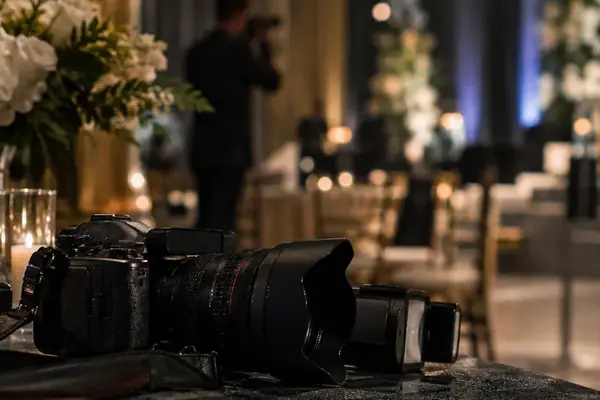
For unobtrusive coverage, fast prime lenses and available natural light become practical tools rather than stylistic preferences. A short or normal prime used near its widest aperture can isolate subjects in dim interiors without relying on disruptive autofocus assist beams. Quiet shutters reduce the mechanical presence of the camera during vows, toasts, and small conversations.
Zone focusing and pre-metering matter as much as lens choice. The photographer identifies pockets of usable illumination, meters the ambient light, and waits for subjects to step into it. This approach does not chase expression across the room. It builds a frame and lets the wedding move through it.
Field Note: Attempting pure photojournalism during a compressed sunset portrait window without providing any micro-adjustments to the couple's positioning often results in missed lighting opportunities.
Blending in without disappearing
Blending in is not the same as hiding. The photographer remains physically present, but socially quiet. Guests stop performing when they no longer feel that every gesture is being evaluated.
This working posture also aligns with the broader ethical standards of photojournalism, particularly the respect for truthful representation. Wedding photography is not news photography, of course, and the comparison has limits. Still, the discipline of not manufacturing emotion carries over cleanly.
The strongest documentary frames often come from restraint: a hand pressed into a parent's shoulder, a half-finished laugh at the bar, a couple standing near the barn door for one breath before rejoining the room.
Implementation in Action: A Lancaster Farm Case Study
The reception barn looked generous from the doorway and complicated through the meter. Historic stone walls held the coolness of the evening. The timber framing lifted into a dark ceiling. The dance floor carried bright pockets and deep falloff, with faces moving quickly through both.
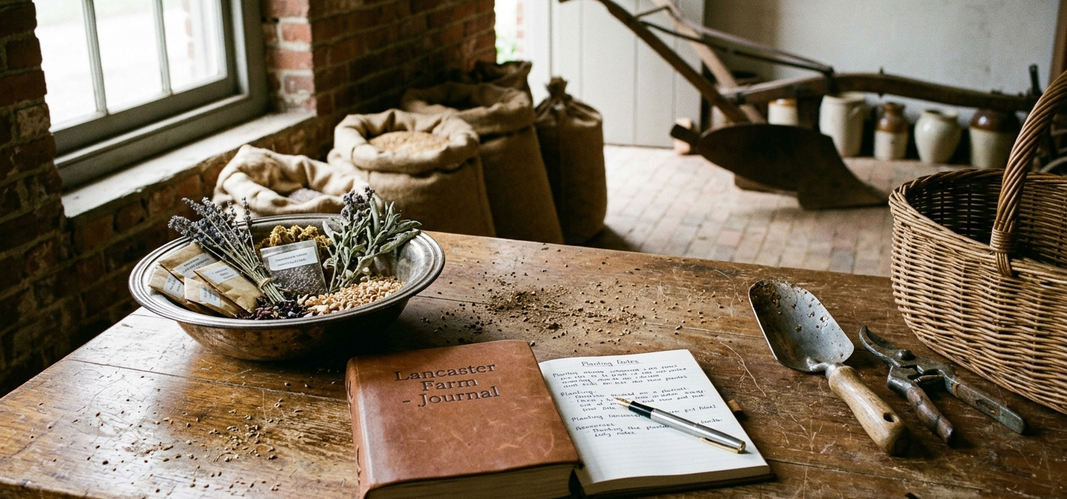
During cocktail hour, the available light shifted fast. The working window was 45 minutes, and fading twilight dropped ambient exposure by nearly three stops over a short span. The coverage plan had to account for that decline before guests noticed it.
Reception lighting inside the stone barn
Inside the barn, the photographer opted to bounce off-camera strobes into the upper timber framing to create a broad wash of ambient-feeling light. The purpose was not to make the room look artificial. It was to preserve the barn's depth while keeping skin tones readable during movement.
The effectiveness of ambient light capture varies drastically between a white-tented reception and a dark-wood historic barn, requiring different ISO thresholds and sensor capabilities. The same discipline applies at Deep Creek Lake, MD, where a lakeside tent and a timbered lodge can behave like two unrelated lighting environments within the same weekend.
Documenting the cocktail hour
The cocktail hour was covered from the edges first. The photographer moved through the crowd slowly, pausing where clusters formed and dissolving before attention shifted toward the camera. Laughter near the bar, a grandparent's embrace beside the patio wall, and a quick squeeze of the couple's hands became the real coverage list.
Documentary Coverage Strategy by Venue Zone| Venue Zone | Lighting Strategy | Focal Length | Primary Objective |
|---|---|---|---|
| Bridal Suite / Prep | Window-lit ambient, reflectors | Short / normal prime | Capture quiet anticipation and unscripted interactions |
| Outdoor Ceremony | Available light with pre-metered exposure | Short / normal prime | Preserve expressions during vows and recessional movement |
| Gravel Path Transition | Open shade and directional evening light | Wide prime | Document guest movement between ceremony and cocktail hour |
| Historic Stone Barn | Bounced off-camera strobes into timber framing | Short / normal prime | Maintain atmosphere while freezing reception gestures |
By the time the formal reception began, the visual language was already established: movement, proximity, and emotional sequence over isolated spectacle.
Scope and Limitations: Where Pure Photojournalism Meets Reality
A strictly documentary approach sounds elegant until the family photographs begin.
One catch: pure documentary coverage struggles in scenarios with highly fragmented family dynamics where specific, historically significant groupings will not naturally assemble themselves without explicit direction. A grandmother may not end up beside all of her grandchildren. Divorced parents may avoid the same room. Siblings may leave for the reception before anyone realizes the only complete grouping has passed.
Why directed portraits still matter
Directed family portraits serve a historical function. They are not always emotionally electric in the moment, but they become valuable as family records. The solution is not to reject them. The solution is to contain them.
During the initial consultation, the photographer can collaboratively draft a streamlined formal shot list with the couple, deliberately capping the family groupings to protect documentary coverage. The best lists are specific, realistic, and sequenced by family structure. They reduce decision-making on the wedding day and prevent the portrait block from expanding into the center of the celebration.
- Identify groupings that will matter in ten or twenty years.
- Remove duplicate combinations that differ only slightly.
- Assign one family contact to gather people before the portrait window begins.
- Keep the couple informed about the trade-off between each added grouping and candid coverage elsewhere.
Practical Boundaries
This is a working method, not a universal rule; conclusions depend on venue layout, family structure, weather, and the couple's tolerance for direction. A wedding at Deep Creek Lake, Maryland may require a different balance than a Lancaster farm if travel between locations compresses the timeline or weather pushes portraits indoors.
Bottom Line: Documentary coverage works best when formal direction is used sparingly, intentionally, and early enough that the rest of the day can breathe.
The Results: A Visual Journey of Authentic Emotion
The final gallery should not feel like a collection of attractive interruptions. It should read as a visual journey through the actual atmosphere of the celebration.
Curation plays a major role in that result. The gallery is sequenced chronologically to preserve the emotional arc of the day, from preparation to ceremony, transition, dinner, toasts, and the late reception. Slightly imperfect frames may remain when they carry the kinetic truth of the scene: motion blur in a dance-floor embrace, a tilted horizon during a fast recessional, or a hand entering the frame at exactly the wrong and right time.
Final gallery delivery typically lands somewhere around the 6 to 8-week mark, with a curated collection in the neighborhood of 600 to 800 images. That range allows the story to breathe without requiring the couple to sort through every near-duplicate gesture.
What couples notice later
Client feedback often centers on presence. Couples remember that they were not constantly aware of the camera during important moments. They see conversations they did not know were happening, expressions that passed too quickly to register, and the small physical details that posed portraits rarely hold.
The difference becomes clearer with time. A perfectly posed portrait can confirm who attended and how everyone looked. An unscripted frame can return the viewer to what the room felt like.
For Lancaster weddings, where landscape, architecture, and family history often share the same frame, authentic photography is not a looser standard. It is a more demanding one. The photographer must understand timing, light, movement, and restraint well enough to let the day remain itself.