The First Look Explained: Balancing Tradition with Intimate Storytelling
Why the Aisle Reveal Can Restrict Emotional Expression
Waiting until the ceremony aisle to see a partner can suppress spontaneous emotional expression by placing an intimate encounter inside a public performance. The processional delivers visual impact, but its choreography leaves little room for a private response. A partner can smile, cry, or reach for a hand; stepping away together to talk usually has to wait.
At a historic estate, the setting intensifies that contrast. Guests turn toward the entrance, phones rise above the seating, and the officiant prepares to begin. The couple must absorb the sight of each other while following cues, managing clothing, and remaining visible to the room. Wedding photography can preserve those expressions, but the ceremony determines how freely they unfold.
A first look moves that encounter into a private, pre-ceremony interval. Its essential architectural shift is simple: separate the couple’s first conversation from the audience’s first view. The approach and reveal receive light direction; what follows belongs to the couple.
The aisle still carries its own significance. Music, gathered family, and the act of entering the ceremony create a different emotional register. Which moment needs privacy, and which benefits from being witnessed?
Building a Quiet Space Around the First Look
A shaded courtyard may look secluded in venue spotlights yet function as the catering team’s main access route. A gallery can offer beautiful window light while sharing a doorway with arriving guests. Location selection therefore begins with circulation: who passes through, which doors open, and where voices carry.
A sheltered stone loggia, shaded grove, or quiet gallery works when the venue can protect its access. The photographer checks the approach, background, footing, and light before either partner arrives. One partner faces away from the entrance; the other approaches along an agreed route and initiates the turn with a shoulder tap or spoken cue.
Photograph Both Faces Without Crowding the Conversation
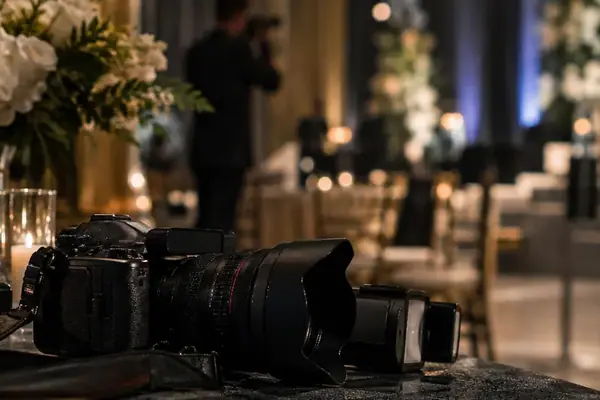
For a dual-photographer arrangement, a practical starting position places each photographer roughly 25 to 40 feet away at opposing 45-degree angles. An 85mm lens and a 135mm lens allow separate views of the partners’ expressions without requiring the photographers to stand beside them. The positions must avoid placing either photographer in the other’s background.
Silent shutter settings reduce interruption where the camera and lighting permit their use. Distance also helps preserve conversational privacy, though an enclosed courtyard can carry sound. The crew should avoid recording private audio and leave a 15-minute unscripted interval after the reveal before introducing portrait directions.
Protect the ConversationDuring that interval, photographers hold their positions. Attire inspection, an embrace, or a quiet exchange needs space to develop without repeated requests to turn toward the camera.
This arrangement suits couples who want private contact before the ceremony. Couples preserving ritual separation, including those following particular ketubah and bedeken traditions, should let their specific observance govern the sequence. An indoor candlelight ceremony may also remove the daylight-based reason for an earlier reveal.
Moving Portraits Ahead of Cocktail Hour in Mid-Atlantic Light
Completing portraits before the ceremony changes the workload after it. Couple portraits, wedding party photographs, and immediate family formals can occupy a substantial block of the afternoon. Moving those groups earlier makes the post-ceremony interval available for greeting guests, provided the necessary people arrive dressed and ready.
The distinction becomes especially useful during late autumn and winter in Pennsylvania and Maryland. When sunset falls before 5:00 PM, a late-afternoon ceremony can consume the remaining daylight. For a fixed schedule that leaves no daylight afterward, natural-light portraits need a pre-ceremony window; a first look makes joint portraits possible within it.
Check the Estate’s Shade Before Setting Portrait Times
The U.S. Naval Observatory solar timetable provides sunset and twilight information for the selected date and location. Those times establish an astronomical reference. Mature trees, valley slopes, and stone buildings can shade the chosen portrait location earlier, so the location check must establish when usable light reaches the actual background.
The resulting schedule should include walking between locations and assembling relatives. A tightly packed list can simply move the pressure earlier—especially when family members expect to arrive with the general guest shuttle.
With those dependencies resolved, event coverage changes character after the ceremony. Instead of calling names through a portrait queue, the photographer can follow the couple into hors d’oeuvres, overlapping conversations, and embraces. The couple experiences the gathering while it is happening.
A 4:30 PM October First-Look Schedule in the Brandywine Valley
Consider a historic stone estate with a 4:30 PM ceremony and a confirmed 6:15 PM sunset. This worked schedule uses a sheltered loggia for the reveal and completes formal photographs before guest arrivals. The planner first reserves the space and routes catering trucks and floral vans away from it between 1:45 PM and 3:45 PM.
1:30 PM: Finish preparations in separate suite wings. Hair, makeup, dressing, and steaming conclude. Photographers check the loggia for even, open shade, clear the approach, and confirm that neither partner will cross the other’s route.
2:00 PM: Begin the private reveal. Partner A faces the garden wall while Partner B approaches. Photographers use silent shutters, with an 85mm prime for expression and a 35mm prime for a wider architectural view from outside the couple’s immediate space. After the turn, they step back and leave 15 minutes for unscripted conversation without posing instructions.
2:30 PM: Make editorial couple portraits. Use the next 30 minutes for a compact route across the estate grounds. Begin near the loggia, then move to the selected garden or stone façade rather than interrupting the session with additional location scouting.
3:00 PM: Photograph the wedding party and immediate family. Complete the pre-approved group list within the allocated 45 minutes. Assign one coordinator who knows the relatives to gather the next grouping while the photographer finishes the current arrangement.
3:45 PM: Return the couple to seclusion. Reserve the next 45 minutes for hydration, makeup retouching, and a clothing check. Keep the portrait list closed while shuttles unload guests between 3:50 PM and 4:20 PM.
4:30 PM: Begin the processional. After the ceremony, the coordinator directs the couple toward cocktail hour rather than another formal-photo assembly. The photographer follows their first greetings; the completed family list stays in the camera bag.