Why Mid-Atlantic Wedding Timelines Need a Solar Anchor
Why should a wedding photography schedule follow the order of dinner service when the portrait light follows the sun?
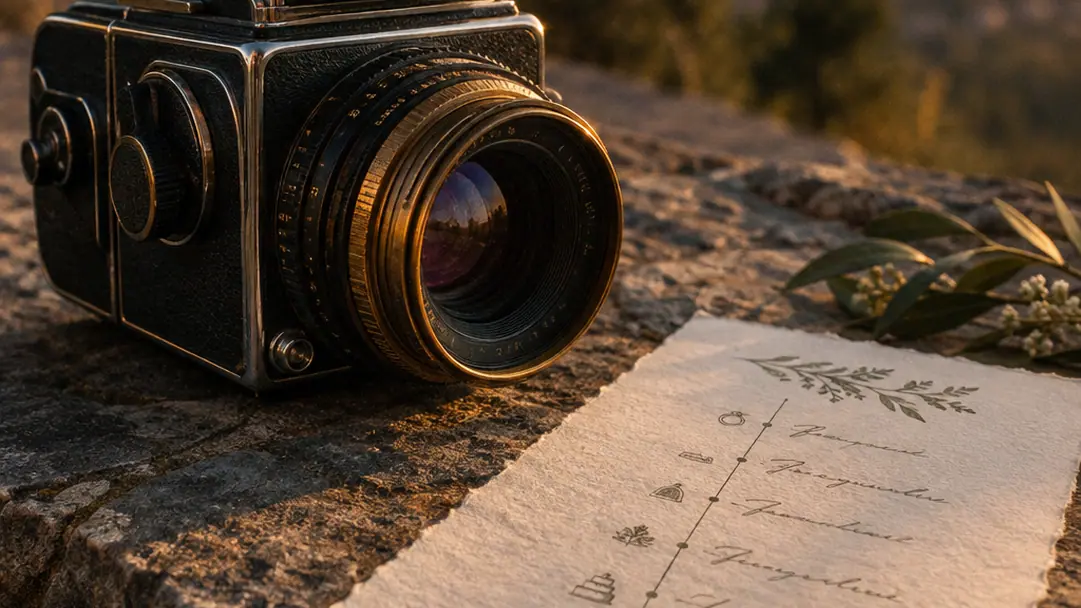
The familiar progression from church ceremony to formal portraits to reception carries the imprint of an earlier photographic workflow. Mid-century wedding coverage paired medium-format cameras with powerful tethered flash units. For formal photographs, artificial illumination gave photographers considerable control over exposure regardless of the exterior light. Church interiors and reception parlors could follow a relatively rigid sequence.
Editorial wedding photography places greater emphasis on available light, movement, and the relationship between people and architecture. That approach changes the scheduling problem. A catering-led timeline can leave a couple seated for an early course while the last directional sunlight crosses the estate lawn.
Across Pennsylvania and Maryland, the visible horizon complicates matters further. Piedmont hills, mature oak canopies, and stone buildings intercept sunlight before the published sunset. Chesapeake breezes introduce a separate practical concern: exposed portrait locations require attention to veils, loose hair, and fabric movement.
The working anchor is the moment direct light leaves the chosen portrait location. Solar azimuth establishes the direction of that light; solar elevation and the intervening landscape determine whether it reaches the couple. Venue spotlights become useful planning references when they identify those conditions rather than simply showing an attractive facade.
Build Backward from the Estate’s Last Direct Light
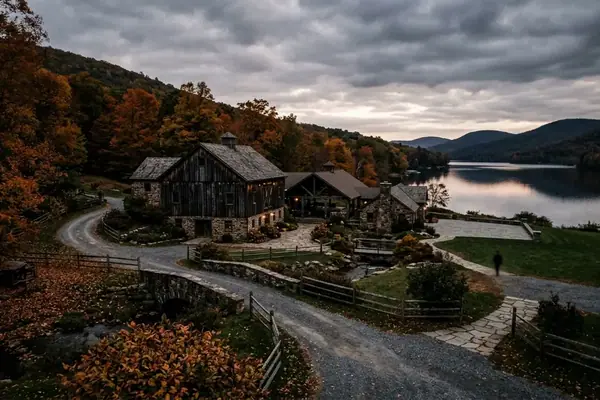
A Bucks County courtyard may retain warm light along an upper stone wall while its gravel paths already sit in shade. At a Frederick valley venue, a wooded slope can intercept the evening sun altogether. Both settings demand a site-specific horizon assessment before the ceremony invitation time becomes fixed.
Separate Published Sunset from Portrait Sunset
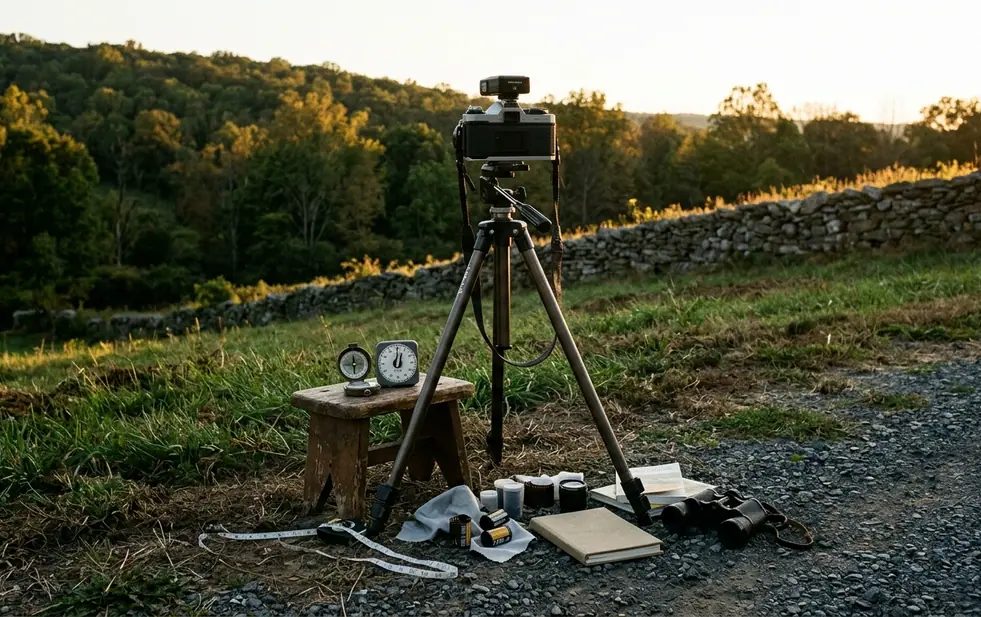
The NOAA Solar Calculator provides the astronomical starting point for the wedding date and location. The photographer then compares the sun’s position with the actual courtyard, lawn, or waterfront chosen for portraits. A weather app’s sunset time describes the solar horizon; the venue’s usable portrait window follows its terrain.
June evenings on the Maryland Eastern Shore offer a comparatively generous sequence: low sunlight across open water, followed by civil twilight. After the November daylight-saving transition, central Pennsylvania operates on a much earlier clock. Ridge lines in the Susquehanna and Lehigh valleys bring the loss of direct warmth forward again.
- Locate the final sunlit portrait area. Check the direction of light against buildings, foliage, and the local ridge line.
- Reserve the couple’s evening portraits. Place this appointment before direct light disappears from that area.
- Work backward through family photographs and the ceremony. Include the recessional, guest movement, and travel between spaces.
- Check twilight separately. Open-water twilight provides soft ambient light after sunset; it produces a different result from sunlit portraits.
For an intentionally candlelit ceremony inside a Philadelphia or Baltimore venue, the lighting plan should instead prioritize the interior exposure and artificial-light setup. For an outdoor ceremony, however, which appointment should move when the meal schedule and the last sunlit portrait slot collide?
Give Window-Lit Preparations and First Looks Their Own Space
Morning preparation photographs depend on a room that functions as a working set. A tall sash window, clear floor space, and an uncluttered table allow stationery, rings, and fabrics to share a coherent direction of light. Bags, breakfast trays, and garment packaging should move elsewhere before photography begins.
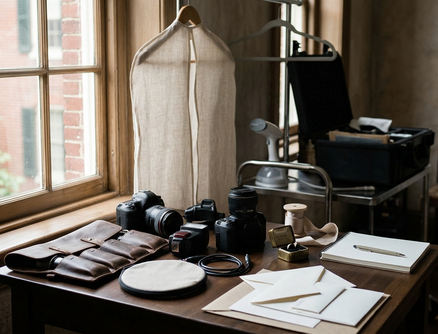
The schedule should give detail styling a dedicated appointment while hair and makeup continue elsewhere. The invitation suite and rings need to arrive together, with ribbons and loose florals ready for handling. This prevents repeated interruptions once dressing begins.
Move from Window Light to Open Shade
A midday First Look introduces a different exposure problem. High-angle sunlight creates deep shadows beneath brows and noses, while bright paving can produce an uncomfortable upward reflection. Open, directional shade beside venue architecture offers a more controlled arrangement: sheltered faces, visible sky ahead, and a background that remains manageable in exposure.
A walkthrough near the proposed portrait time should identify north-facing stonework, deep porches, or tree-line edges. Neutral surfaces such as pale limestone can return light toward faces. The photographer should also inspect the background; a shaded couple against a sun-struck lawn creates a very different tonal relationship from a shaded couple against stone.
Protect Dressing and Door-to-Door Travel
Beauty completion belongs ahead of dressing, with space for final adjustments before the First Look. Transport requires its own allowance beyond the mapped drive. Boarding a shuttle, gathering bouquets, negotiating chapel steps, and lifting a gown into a vehicle all consume schedule space.
Each transfer should therefore appear as a complete door-to-door block. A named coordinator gathers the wedding party before departure, while the photographer confirms the arrival location. Travel friction should use its assigned buffer rather than the portrait appointment.
Keep Dinner Service from Consuming Golden Hour
The evening portrait departure works best as an agreed service cue. During the vendor briefing, the photography team and catering captain select a short opening: after the couple collects a cocktail, or between salad clearance and main-course plating. The route stays close to the reception, with the portrait location already selected.
A dedicated, roughly 20-minute appointment gives the couple a clear departure and return—without an improvised search for light. Shoes, bouquet, and any veil needed for the photographs should be ready before the cue.
Extended receiving lines and loosely organized family photographs can absorb this opening. A curated family list, arranged by overlapping participants, keeps relatives from repeatedly leaving and rejoining the group. Someone who recognizes the family should gather the next grouping while the photographer finishes the current one.
The daylight sequence then has distinct purposes: open shade for family formals, low-angle sunlight for the couple, and civil twilight for softer environmental photographs where the horizon remains open. These photography insights belong in the event coverage schedule alongside speeches and meal service.
Earth’s approximately 23.5-degree axial tilt makes that scheduling choice tangible: near the 40th parallel, sunset on local clocks arrives roughly four hours earlier in mid-December than at the June solstice.